USB-C soldering irons, and why the charger you already own decides which one works
The short answer
Prices in GBPUSDEUReach row carries the day it was read
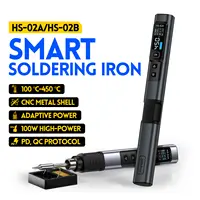
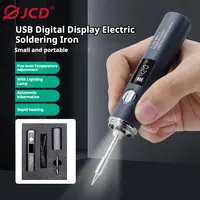
A soldering iron that runs off a USB-C cable is a genuinely useful thing. It means the kit that fixes a headphone cable, a drone motor or a doorbell lives in a drawer rather than on a bench, and it charges from the same brick as everything else.
It also means the specification that matters most is not printed on the iron. It is printed on your charger.
The fork: a cell inside, or power from the cable
Five of these twelve titles state a battery capacity, from 600mAh to 1000mAh. Those are battery pens: charge them, walk away from the socket, and work for as long as the cell lasts.
The rest draw their power down the cable while they work. Two of those say PD, and PD is the part that matters. A USB-C socket gives 5V to anything that does not ask for more, and a soldering iron that only ever gets 5V is running on the power of a bright torch. PD is the negotiation that lets the iron ask for 20V, and asking is how it gets to the wattage in its title.
So the question is not which iron is better. It is which of these you are:
- Away from a socket, small joints, occasional. A battery pen. It will handle a headphone wire, a switch, a broken connector on a toy.
- At a desk, real repairs, anything with mass. A PD iron and a PD charger. A ground plane, a thick wire or a battery tab pulls heat out of the tip faster than a pen can put it back, and an iron that cannot keep up makes a joint that looks fine and is not.
The wattage is a request
Three titles here state a wattage: two say 100W and one says 65W. Read those as what the iron will ask a charger for, not as what it will receive.
Plug a 100W iron into the 20W charger that came with a phone and you have a 20W iron. Plug it into a laptop charger that does 65W or 100W over USB-C and you have most or all of what the title promises. The cable matters too: a thin charging cable is not rated for the current and will limit it.
This is the one thing to check before spending anything. Look at the small print on the charger you already own, find the USB-C line, and buy an iron that your charger can feed.
Adjustable, and the two titles that say what that means
Every one of these twelve says the temperature adjusts. Two say what the range is: 180 to 450 degrees, and 260 to 420. Three give a count of settings rather than a range, in the form of three gears, a third gear, and five speeds. One title, and only one, gives both.
That leaves eight irons claiming a feature without a single number attached to it. For soldering, the numbers are not decoration. Leaded solder flows at around 190 degrees and is usually worked at 300 to 350. Lead-free needs more, usually 350 to 400. A pen whose top temperature you cannot find out is a pen that might not melt the solder you own.
Where a title gives you steps rather than degrees, the steps are the whole adjustment: a three gear pen has three temperatures, and one of them is probably the right one.
Tips are the consumable
One title here names a tip standard, and it names two, TS100 and T12. Those are the two shapes the portable iron world settled on, and a tip that fits them can be bought from many sellers in many profiles: fine conical for electronics, chisel for wire, knife for dragging across a row of pins.
One other title says its tip can be replaced without saying with what, and one sells six heads with its set. The other nine say nothing about tips at all, which usually means the tip is proprietary and the iron lasts exactly as long as the tip does. Tips wear out. They oxidise, they pit, and a worn tip stops taking solder in a way that feels like the iron itself has failed.
If you expect to keep the iron for years, buy into a tip standard.
The same pen, four times
Four of these twelve are the same household pen, listed by four sellers with the same words in a different order. The only specification that varies between them is the cell: one says 800mAh, one says 1000mAh, one says 800 or 1000 without deciding, and one does not mention a cell at all.
That is worth understanding rather than avoiding. It is what a marketplace looks like when a factory sells through many shops. The cell size is the only lever the sellers have on each other, so it is the one thing to compare, and where a title has stopped stating it you should assume the smaller one.
What the titles never tell you
How long a charge lasts. No title here states a runtime. A small cell driving a heating element is a short story: minutes of work, not hours.
Whether the cell is replaceable. No title here says it is, so assume it is not. On a battery pen the cell is the lifespan of the tool, and a cell that is charged and drained daily has a few hundred cycles in it.
What temperature it is at right now. Two titles here mention a screen, one calling it a digital screen and one an OLED. Without one you are trusting a number printed beside a switch, on a device that reaches four hundred degrees.
The thing that has nothing to do with the iron
Solder, flux, a stand, and light. A good iron with old solder and no flux makes bad joints, and a hot iron with nowhere to rest burns whatever it touches, which at these temperatures includes the desk and you. On light, the clamp desk lamp guide covers the magnifier lamps, which are the other half of seeing what you are soldering. None of that is on this page; all of it costs less than the difference between the cheapest and the dearest iron here.
Work in a ventilated room, and wash your hands after handling leaded solder.
What I would actually do
For a drawer that has to handle real repairs, the HGLRC RC2. It is the only title on this page that gives you all four numbers that matter: the wattage, PD and QC so it can actually draw it, a screen so you know where the tip is, and the two tip standards so replacements will exist for years.
For more heat from a name you can look up, the FNIRSI HS-02. It states 100W and a ceramic core, and it comes as a set, so check what is in the box against what you already have.
If you only need to fix a wire now and then, the five speed pen. It is the one title on this page that gives both a temperature range and a count of settings, and the only one that says the tip can be replaced. Buy it knowing what it is: a pen for small joints, not a small workshop.
And before any of them, read the charger.
Side by side
Prices in GBPUSDEUR. Each row carries the date its price was read.
| Product | Price | Why it is here | Where to buyLink |
|---|---|---|---|
| Best overall HGLRC RC2 65W Soldering Iron USB C PD QC OLED | £41.25$55.01€48.54checked 18 Oct 2026 | HGLRC RC2, the only title that states a wattage, says PD and QC, has a screen to show the temperature, and names TS100 and T12 tips so replacements are easy to find | Check opens in a new tab |
| More heat, from a name FNIRSI HS-02 100W USB Soldering Iron Set Adjustable | £26.27$33.87€30.92checked 18 Oct 2026 | FNIRSI HS-02, a brand you can search, sold as a set, stating 100W and a ceramic core rather than leaving the heating element unnamed | Check opens in a new tab |
| If a cheap pen is all you need USB Type-C Soldering Iron | £12.44$16.03€14.63checked 18 Oct 2026 | The only title here that states both its temperature range and how many settings it has, and the only one that says the tip can be replaced | Check opens in a new tab |
What separates these irons
- A stated wattage is the first real number on this shelf. Three of these twelve give one, 65W and 100W, and it is the difference between melting solder on a small joint and melting it on a wire that carries heat away.
- PD, power delivery, means the iron negotiates with a USB-C charger for more than the 5V a socket gives by default. Two titles say it. Without it, a USB iron is a 5V iron whatever else the title claims.
- A temperature range in degrees is what adjustable is supposed to mean. All twelve titles say the temperature adjusts and two say what the range is, 180 to 450 and 260 to 420.
- A tip standard, and one title names two of them, means replacement tips exist from more than one seller. A tip is a consumable. A pen whose tip you cannot replace is a pen with a shelf life.
What to read twice before buying
- The wattage is what the iron asks for, not what it gets. A 100W iron on a 20W phone charger is a 20W iron. Check what your charger can actually deliver on USB-C before you buy the heat you are paying for.
- Four of these twelve are the same household pen from four sellers, and the only difference stated in the titles is the size of the cell: 800mAh, 1000mAh, one that says 800 or 1000, and one that says neither. Compare those before the pictures.
- One listing is four irons. The most expensive line here is a set of four with six tips, which is why it costs what it does. It is not one iron priced like a workshop.
- Adjustable with no numbers is not a specification. Eight of the twelve claim an adjustable temperature and then give no number of any kind, neither a range nor a count of settings. On a battery pen the honest reading is a few fixed steps rather than a dial.