Cabinet hinges, where 35mm is the hole and the overlay is the measurement nobody takes
The short answer
Prices in GBPUSDEUReach row carries the day it was read

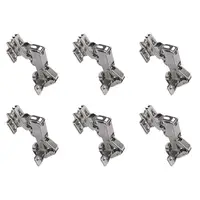

A cabinet hinge is a thing most people buy twice: once when a door starts to bang, and again when the first set turns out not to fit. Twenty of them are on this page, all soft-close, and the titles are generous about the number that is already decided for you and quiet about the one you have to measure.
35mm is the hole, not a choice
Eighteen titles say 35mm. That is the diameter of the round, flat-bottomed recess bored into the back of the cabinet door, into which the cup of the hinge sits. It is the European standard, and it is what your existing doors almost certainly have.
So it is not a decision. It is a check: look at the back of your door, and if the recess is 35 millimetres across, every hinge on this page fits that part of the job. If it is 26mm, which turns up on some older and lighter doors, none of these do.
One title also gives the depth, 11.5mm, which is the other half of the bore and the only one on the page to say it. Standard is 11 to 13.
The overlay, which is the actual decision
This is the measurement that decides whether a hinge fits, and five titles mention it.
Full overlay means the door covers the whole thickness of the cabinet side it hangs on. Most single doors on a run of units are this.
Half overlay means two doors hang on one shared panel between two units, so each covers half of it. If you have a pair of cupboards side by side with one upright between them, that is this.
Inset means the door sits inside the frame, flush with the front, with the cabinet side visible beside it. Older and more expensive kitchens.
They are different hinges: the arm has a different crank. Two titles here offer all three from a single listing, which means you choose at checkout and the seller assumes you know. Take the old hinge off, and if you can, take it to the listing photographs and match the shape of the arm.
The mounting plate is the third part of this, and only one title mentions it. A European hinge is an arm that clips into the cup and a plate that screws to the cabinet side, and plates come in heights, usually 0, 3 and 6 millimetres. The plate height and the arm crank together set the overlay. If a listing shows only an arm, ask whether the plate is in the box.
Soft close, and what the piston is
All twenty titles say soft close. Thirteen say hydraulic and seven name the damper or buffer.
Inside the arm is a small oil-filled cylinder. For the last few centimetres of travel it takes over from the spring and slows the door so it settles rather than slams. It is a genuinely good thing and it is why these cost more than a plain sprung hinge.
It is also a wearing part. The oil seal is the weak point, and on a cheap hinge the catch gets softer over a few years until the door bangs again. There is no way to tell from a title which of these will do that, which brings us to the number none of them prints.
The number nobody gives
Hinge makers test to a cycle count: 50,000 or 80,000 opens and closes, to a published standard. Not one title here gives one.
A kitchen cupboard gets opened perhaps five times a day, which is under two thousand a year. A 50,000-cycle hinge is a twenty-year hinge and a poor one may be a three-year hinge, and the price difference is pennies. In the absence of a number, a maker’s name is the closest thing to a proxy, which is why the three names on this page are worth something.
Steel, and the four things it means
Twelve titles say steel, and they do not mean the same thing.
304 stainless, on six titles, is the grade that does not rust in a damp room. For a bathroom cabinet, an under-sink unit or a utility room, it is the one to have.
Rustless steel, on two, is not a grade. It is a description, and it usually means plated.
Cold rolled steel, on two, is mild steel, plated to look bright. It is what most cheap hinges are and it is entirely fine in a dry kitchen, and it will bloom with rust in a shower room.
Zinc alloy, on one, is cast rather than pressed. It takes a nice finish and it is the most brittle of the four.
Angles
Five titles give an opening angle. 90 degrees on two, which opens a door to a right angle and no further. 95 to 105 on one, which is the ordinary kitchen hinge and lets the door fall out of the way. 125 on one. And 180 degrees on one, which folds the door right back against the next cabinet.
Ninety-five is enough for a cupboard you reach into. You want more than that in exactly two cases: a corner unit where the door has to clear the opening, and a unit with a drawer behind the door, where the drawer cannot come out until the door is flat against the side.
The precision screwdriver guide covers the tool you will want when you come to adjust these, because every one of these hinges has two or three screws that move the door up, sideways and in.
What I would actually do
For most cupboards, the 304 stainless set that states the cup depth as well as the diameter and offers all three overlays. It is the most complete description on the page, and stainless costs almost nothing extra.
For a kitchen you intend to keep, the DTC. It is a hinge maker rather than a seller, and on a part with no published cycle count that is the best signal available.
For a corner unit or a drawer behind a door, the 180 degree. Nothing else here opens far enough.
If you are replacing a hinge that has failed, the one that states the overlay, the angle and the screws. Take the old one off first, count how many you need, and buy one spare.
Whichever you choose, measure the cup in your door before you order, and work out your overlay before you pick a variant from a menu.
Side by side
Prices in GBPUSDEUR. Each row carries the date its price was read.
| Product | Price | Why it is here | Where to buyLink |
|---|---|---|---|
| Best overall 304 Stainless Steel Soft-Close Cabinet Hinges | £12.11$16.15€14.25checked 18 Oct 2026 | 304 stainless, and the only title on the page that states the cup depth as well as the diameter, 11.5mm, with full, half and inset all offered from the one listing | Check opens in a new tab |
| For a kitchen 4Pcs 304 Stainless Steel Hydraulic Soft Close | £7.94$10.59€9.34checked 18 Oct 2026 | DTC, a hinge maker whose hardware is fitted in kitchens sold here, in 304 stainless and sold in fours, which is two doors' worth | Check opens in a new tab |
| For a corner or a drawer behind a door 180 Degree Full-Extension For Soft-Close Hydraulic | £22.45$29.06€26.41checked 18 Oct 2026 | 180 degrees, which is the angle that gets the door completely out of the way of a drawer or a carousel, and the only title here that opens that far | Check opens in a new tab |
What a title here can settle
- 35mm, on eighteen titles, is the diameter of the round recess bored into the back of the door. It is the European standard and almost every flat-pack and fitted kitchen in the country uses it, so the number to check is the one already in your door, not the one you want.
- The overlay, on five titles. Full overlay means the door sits over the whole side panel, half overlay means two doors share one panel between them, and inset means the door sits flush inside the frame. Three different hinges. Two titles here sell all three from one listing, so you pick at checkout and have to know which you need.
- The opening angle, on five titles: 90 on two, and 95 to 105, 125 and 180 on one each. A 95-degree hinge opens the door out of the way. A 165 or 180 lets a drawer slide out past the door, which is what you need on a corner unit or in front of an internal drawer.
- Three maker names appear, across six titles: DTC on three, NAIERDI on two, KAK on one. DTC is a real hinge manufacturer whose hinges are fitted in kitchens sold in this country, and on hardware that has to survive twenty thousand closes, a name is worth the extra pound.
What to read twice
- Soft close is a piston, and pistons fail. All twenty say it, thirteen say hydraulic and seven name the damper. The mechanism is a small oil cylinder that catches the door for the last few centimetres. On a cheap hinge it weakens after a few years and the door starts to bang again. That is the part you are paying for, and it is the part with a lifespan.
- Nobody says how many closes it is rated for. Real hinge makers publish a cycle count, usually 50,000 or 80,000. Not one of these twenty gives a number, and on a kitchen cupboard opened five times a day that is the only figure that separates a hinge that lasts fifteen years from one that lasts three.
- Steel is on twelve titles and it means four different things. Six say 304 stainless, which does not rust in a bathroom. Two say rustless, which is a word rather than a grade. Two say cold rolled steel, which is plated mild steel and will rust if it gets wet. One says zinc alloy, which is cast and the most brittle of them.
- Only one title mentions the mounting plate, and a European hinge is two parts: the arm that clips to the cup in the door and the plate that screws to the cabinet side. Plates come in heights, usually 0, 3 and 6 millimetres, and the height is a third of what sets the overlay. A listing that shows only the arm may or may not include one.