Manual coffee grinders, and why the burrs decide everything
The short answer
Prices in GBPUSDEUReach row carries the day it was read
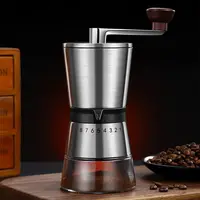
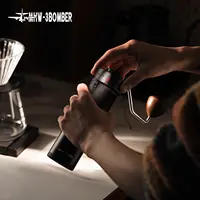
Ground coffee goes stale in days. Beans last weeks. A hand grinder is the cheapest way to close that gap, and at the price of a few bags of coffee it is one of the better upgrades a kitchen can make. The grinders on this page all crank beans into grounds. What separates them is what the grounds look like afterwards, and that is decided by three things a title tells you.
Burrs, and why blades are not on this page
A grinder either crushes beans between two ridged surfaces, the burrs, or chops them with a spinning blade. Blade grinders make dust and boulders in the same batch, and the coffee tastes of both. Everything here uses burrs, which is the first thing to check on any grinder you find elsewhere.
Ceramic burrs do not rust and stay sharp for years, and they are slower and grind less evenly than steel. For a cafetiere or a drip filter, where the grind is coarse and the tolerance is wide, ceramic is fine and cheaper.
Stainless steel burrs, usually conical, cut faster and more consistently, and the grinders people recommend to each other on coffee forums have them. For espresso, where the grind is fine and a small unevenness changes the shot, steel is the only answer. Two titles here say stainless steel, four say conical, and the Timemore names its burr, S2C, which is steel. Five say ceramic, and in saying it they are telling you which use they are for.
Clicks, and finding the same grind twice
A grinder’s adjustment either turns smoothly, or it clicks. Clicks are steps, and steps mean you can write down “18 clicks” and get the same grind next week. A smooth adjustment is a guess every time.
The size of each step matters most for espresso, where the difference between a good shot and a bad one is a fraction of a turn. One title here states its step: 0.015mm per click. That number is why that grinder is the espresso pick. The others state a number of steps, or nothing. “8 adjustable” means eight settings across the whole range, which is fine for coarse and medium and too coarse a ladder for espresso; “40 external adjustments”, on another title here, is a finer ladder and says so.
Bearings, the word that means the burr does not wobble
The inner burr sits on a shaft turned by the handle. On a cheap grinder the shaft is held at one end and wobbles at the other, so the gap between the burrs changes as you crank, and the grounds come out mixed sizes. That is the single biggest reason cheap grinders disappoint.
A grinder whose title says bearing or dual bearing holds the shaft at both ends, and the gap stays put. It is the least glamorous word in the titles and the one most worth paying for.
The brands
Timemore, Kingrinder, MHW-3BOMBER and Commander are names that appear in coffee forums, and their model numbers, C3, P1, R3, C40, are the point: you can search the exact model and read what other people found. Spare burrs and handles exist. A grinder with no brand in the title may be identical to one of these and may not, and there is no way to know.
The antique
One grinder here is the wooden box with a crank on top and a little drawer. It is a pleasant object and it grinds coffee, slowly, with a ceramic burr on a shaft held at one end. It is a decoration that also works. If the shelf is the point, it is the right buy. If the coffee is the point, it is not.
What the titles do not say
No title here gives a capacity. A hand grinder holds somewhere between twenty and thirty-five grams, which is one large cup or two small ones per fill. For a household of two, that is two fills per pot, and it is worth finding the grams in the listing before deciding the effort is fine.
And the effort is real. A cafetiere grind takes under a minute of cranking. An espresso grind is finer and harder and takes longer. Every one of these is a workout you do twice a day, and a title cannot tell you whether that suits you.
What I would actually do
For most kitchens, the Timemore C3S Pro. Steel burrs, a brand with spare parts, and the model most people move to after a cheap grinder disappoints them.
For a cafetiere on a budget, the ceramic grinder with eight steps. It does that job, it costs the least, and it will not rust.
For espresso, the MHW-3BOMBER R3 Pro, because it is the only title here that tells you the size of its step, and for espresso the step is the whole grinder.
Whichever you choose, look for the word bearing before the word burr.
And if you are weighing the beans, which is the other half of a repeatable cup, the kitchen scale guide explains why a coffee scale and a kitchen scale are different tools.
Side by side
Prices in GBPUSDEUR. Each row carries the date its price was read.
| Product | Price | Why it is here | Where to buyLink |
|---|---|---|---|
| Best overall TIMEMORE Chestnut C3S Pro / C3ESP Manual Coffee | £52.77$70.38€62.10checked 18 Oct 2026 | Timemore Chestnut C3S Pro, a brand with spare parts and a foldable handle, from the range most people upgrade to | Check opens in a new tab |
| For a cafetiere on a budget 8 Adjustable Manual Coffee Grinder Hand Mill | £17.98$23.98€21.15checked 18 Oct 2026 | Ceramic burrs and an eight step adjustment, which is enough for coarse and medium grinds | Check opens in a new tab |
| For espresso MHW-3BOMBER R3 Pro Upgrade Manual Coffee Grinder | £100.86$130.00€118.71checked 18 Oct 2026 | MHW-3BOMBER R3 Pro, and the only title here that states its step, 0.015mm per click | Check opens in a new tab |
The three things in the title that matter
- Stainless steel conical burrs cut faster and more evenly than ceramic, and they are what the grinders people recommend to each other use. Two titles here say stainless steel, four say conical, and the Timemore names its own steel burr, S2C.
- Clicks, a stepped adjustment, means you can find the same grind again tomorrow. One title here states the step, 0.015mm per click, which is the espresso number.
- Bearings in the title mean the shaft is held straight at both ends, so the burr does not wobble. A wobbling burr is the main reason a cheap grinder makes uneven grounds, and a title that says bearing is telling you it has fixed that.
- A brand with a model number, Timemore C3, Kingrinder P1, MHW-3BOMBER R3, Commander C40, means spare burrs exist and other people have written about the grinder.
What the wooden one is for
- Ceramic burrs are slower and duller. They do not rust, which is their whole advantage, and a ceramic grinder is fine for a cafetiere. It is not for espresso.
- An antique-style wooden grinder is furniture. One is on this page. It grinds coffee, slowly and unevenly, and it looks lovely on a shelf. Buy it for the shelf.
- Capacity is stated in no title here, and a grinder that holds 20 grams makes one cup per fill. Check the listing for grams before buying for two.
- Hand grinding takes effort. Sixty seconds of cranking for a cafetiere, longer and harder for espresso. If that sounds like a chore, it is, and an electric grinder is the honest answer.