Sunglasses, where fourteen titles say driving and not one states a lens category
The short answer
Prices in GBPUSDEUReach row carries the day it was read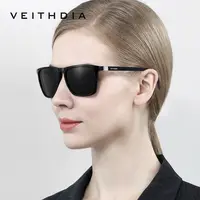


Sunglasses are the one accessory where the cheap version and the expensive version can do exactly the same job, and where the words on the listing are almost all about fashion. Twenty pairs are on this page, and the number that matters most is on none of them.
The lens category, and why fourteen driving titles should worry you
European lenses are graded from 0 to 4 for how much visible light they let through.
Category 0 is a clear or very lightly tinted lens, for overcast days and indoors. Category 1 and 2 are light and medium tints. Category 3 is what most people mean by sunglasses: dark, for a bright day, and fine for driving. Category 4 is the very dark lens made for glaciers, high altitude and open water, and it is not legal to drive in anywhere in Europe, in daylight or after dark, because it blocks too much light for you to read a road properly.
Fourteen of these twenty titles say driving. Not one states its category.
That does not mean any of them is category 4, and most cheap sunglasses are category 3. It does mean the seller has not told you, on a product they are selling for exactly the activity where the answer matters. If the listing photographs show a lens you can barely see the model’s eyes through, be suspicious. If there is a category marking, it is stamped on the inside of the temple arm as CAT 3 or a small sun symbol, and it is worth checking when the parcel arrives.
What polarised actually does
Eighteen titles say polarised, and this is the real feature on this page.
Light bouncing off a flat surface comes back organised in one direction. A polarising filter is a grid that blocks light arranged that way and lets the rest through. The effect is that the white glare off a wet road, a lake, a car bonnet or a snowfield disappears, while everything else looks normal. Drivers and anglers notice it immediately, which is why five titles here mention fishing.
Two things to know before you buy. Polarised lenses make many LCD screens go dark or rainbow-streaked at certain angles, which includes some car dashboards, cash machines and phone screens held sideways. And on ice, they hide exactly the glare that tells you the road is frozen, which is why some drivers keep a plain pair in winter.
UV400, and the ten titles that never mention it
Ten titles say UV400, and two of those ten say UV protection as well. The other ten say nothing about ultraviolet anywhere.
UV400 means the lens stops light with a wavelength below 400 nanometres, which covers UVA and UVB. Polycarbonate does that on its own, tinted or clear, by being polycarbonate. Acrylic is the other cheap lens plastic and it does not, not unless the maker puts something in it that does. One title says its lenses are nylon and the other nineteen say nothing, so on nineteen of the twenty there is no telling polycarbonate from acrylic. The section below on what none of them says is the same finding from the other end.
So UV400 is not much of a way to choose between two pairs that both claim it. It is a good way to choose against the ten that claim nothing, because a dark lens with no ultraviolet filter is worse for your eyes than no sunglasses at all: the darkness makes your pupils open wider, and a wider pupil lets more ultraviolet through than you would ever take while squinting into the sun.
Photochromic, and the windscreen problem
Two titles are photochromic, one of them selling itself as chameleon. The lens holds molecules that change shape under ultraviolet light and darken, then relax and clear when the light drops.
The catch is specific and worth knowing: a car windscreen blocks most ultraviolet. Laminated glass is very good at it. So a photochromic lens behind a windscreen sits somewhere between pale and half done, on the one occasion you most wanted it dark. They are excellent for a walk, a round of golf or a day that cannot decide, and they are the wrong tool for a commute.
They also darken more slowly in the cold, and they never go fully clear again after a few years.
Clip-ons, for people who already wear glasses
Four titles are clip-ons and four mention myopia or optical frames. If you wear glasses to see, these are the sensible answer: a polarised lens on a light frame that clips to the front of your own glasses, often on a hinge so it flips up when you enter a tunnel.
Prescription sunglasses cost what a second pair of glasses costs. A clip-on does the same job badly enough that you notice and well enough that most people stop noticing after a week. Check the width of your own frames against the listing before ordering, because clip-ons come in sizes and the fit is the whole thing.
None of the four clip-ons says UV400. The only clip-on on this page that does is the night vision pair in the next section, which is the one title here to skip, so there is no clip-on that states a filter without also making a claim you should ignore. That matters less on a clip-on than it would on a standalone pair, because a clip-on sits in front of your own prescription lenses and most modern plastic prescription lenses already stop ultraviolet, which leaves the clip-on doing the glare. It is still worth asking the seller, and worth knowing that the part protecting your eyes is probably the pair already on your face rather than the one you are buying.
One title is not a clip-on but a magnetic frame, where the sun lenses attach to the front of the optical frame with magnets. Neater and it only works with the frame it is sold with.
Night vision, which is the one to skip
One title offers night vision glasses: yellow lenses sold for driving after dark. It is one of the clip-ons, which is why the clip-on picked below is a different one.
The theory is that a yellow tint cuts blue light and therefore glare from oncoming headlights. It does. It also cuts the total amount of light reaching your eye, and at night the amount of light reaching your eye is the entire problem. Studies of yellow night driving lenses find they make drivers feel they can see better and detect pedestrians no sooner, and sometimes later.
If headlight glare bothers you, the useful answers are a clean windscreen, an anti-reflective coating on your normal glasses, and an eye test.
Worth knowing: several of the clip-on sets here arrive with a spare yellow lens in the box whether or not the title mentions one. That is not a reason to avoid the set. Use the dark lens and leave the yellow one in the case.
Names, and the nine titles that have none
Five titles name a maker: VEITHDIA twice, KAROS, SEAMERGO and Olamins. Those are searchable, they have ranges, and one of them prints a model code on the title, which is the most specific thing on the page.
Nine titles say luxury brand, brand design, brand designer or Germany brand design, and name nobody. That is a description dressed as a label. The card holder guide ran into exactly the same phrase on a different shelf, and the rule is the same: a brand is a name you can search, and if the listing will not say it, it is not one.
What none of them says
The lens category. Discussed above, and the one real gap.
The lens material. One says nylon and one says stress-resistant. Nylon lenses are lighter and more optically stable than polycarbonate and are what good sports glasses use; nobody else here says what theirs are made of.
The frame width. Nothing, on a product where a frame too narrow for your face pinches all day and one too wide slides down your nose. The measurement to look for in the listing is the lens width plus bridge plus arm, printed as three numbers.
What I would actually do
For most people, the VEITHDIA on the TR90 frame. A maker with a name, a frame material that survives a pocket, polarised lenses, and a model code on the title so you can look up the exact pair.
For driving, the rimless TR90 pair in the plain grey lens, chosen precisely because it is not photochromic. Check for a CAT 3 marking on the arm when it arrives.
If you wear prescription glasses, the folding polarised clip-on. Measure your own frames first, and note it is not the clip-on with the yellow night lenses.
For a day of changing light on foot, the photochromic pair, bought knowing it will not darken behind a windscreen.
Whichever you buy, look for the category marking on the arm, and if the lens is so dark you cannot see your own eyes in a mirror, do not drive in it.
Side by side
Prices in GBPUSDEUR. Each row carries the date its price was read.
| Product | Price | Why it is here | Where to buyLink |
|---|---|---|---|
| Best overall VEITHDIA Brand Square Sunglasses TR90 Gradient Frame | £8.14$10.49€9.58checked 18 Oct 2026 | VEITHDIA, a maker you can search, on a TR90 frame that springs back instead of snapping rather than a metal one that bends, with polarised lenses and a model code printed on the title | Check opens in a new tab |
| For driving New TR90 Polarized Sunglasses Men Women Frameless | £4.32$5.77€5.09checked 18 Oct 2026 | Polarised and not photochromic, which is the right way round for a car, in a rimless TR90 frame that weighs 10g by its own photograph and measures 14.5cm across. It comes in a plain grey lens and two mirrored ones; take the grey, because a mirror coating makes a lens darker, and like every pair here it does not state its category | Check opens in a new tab |
| If you wear prescription glasses Sun Glasses Clip On Polarized Sunglasses Man Women | £18.66$24.89€21.96checked 18 Oct 2026 | A polarised clip-on that folds, so it goes over the glasses you already own and into a pocket. It names no maker, and what you are buying here is the mechanism and the glare. No clip-on here states a UV filter, so what stops the ultraviolet is whatever is already on your own lenses. The spare yellow lens in the box is for leaving in the box | Check opens in a new tab |
What a title here can settle
- Polarised, on eighteen titles, and it is the one feature here that genuinely changes what you see. A polarising filter cuts the glare that bounces off flat surfaces: wet road, water, a car bonnet, snow. On a bright motorway or beside a river the difference is not subtle.
- A clip-on, on four titles, and myopia or optical on four. If you wear prescription glasses, a clip-on gives you polarised lenses over the ones you already own, for a fraction of what prescription sunglasses cost, and you can flip them up in a tunnel.
- The frame material, on six titles and seven times, because the pilot names its frame and its lenses both: TR90 on two, pure titanium on one, metal or stainless steel on three, nylon on one. TR90 is a springy nylon that survives being sat on; titanium is light and does not corrode; metal looks better and bends.
- Five titles carry a maker's name, VEITHDIA twice, KAROS, SEAMERGO and Olamins. On a shelf where nine titles say luxury, brand or designer without naming one, a name you can search is the difference between a description and a maker.
What to read twice
- Not one title gives a lens category, and fourteen say driving. Lenses are graded 0 to 4 for how much light they block. Category 3 is ordinary dark sunglasses and is fine to drive in. Category 4 is the very dark glacier tint, and it is not legal to drive in anywhere in Europe, day or night. No title on this page says which it is, and only the listing photographs give you a clue.
- Ten titles say UV400 and the other ten say nothing about ultraviolet at all. UV400 means the lens stops light below 400 nanometres, which covers UVA and UVB. Polycarbonate does that by being polycarbonate, and acrylic, the other cheap lens plastic, does not unless the maker puts something in it that does. One title says its lenses are nylon and the other nineteen say nothing, so on the ten that claim no filter either there is nothing at all to go on.
- Photochromic lenses barely work in a car. Two titles here are photochromic, one calling itself chameleon. They darken in ultraviolet light, and a windscreen blocks most ultraviolet, so they stay pale exactly when you are driving into the sun. Buy them for walking, not for the commute.
- One title sells night vision glasses. Those are the yellow lenses sold for driving after dark. A yellow lens cuts glare by cutting light, and at night you need all the light there is. They make the road feel brighter and measurably reduce what you can actually see.