Insoles, where arch support is on every title and how high the arch is on none
The short answer
Prices in GBPUSDEUReach row carries the day it was read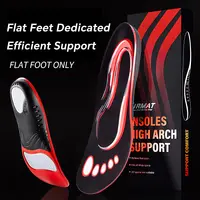


An insole is the cheapest thing you can change about a pair of shoes, and it is sold with two words that appear on every single listing and settle nothing. Twenty of them are on this page, and one sandal that came along for the ride.
The arch, and the number nobody prints
All twenty titles say arch support. Six say flat foot or flatfoot and three say correction.
Here is what a support actually is: a raised shape under the middle of the foot, and the height of that raise is the whole product. Supports are made low, medium and high. A high one under a foot with a high arch feels like the shoe was finally built properly. The same high one under a flat foot presses into the arch from below all day and is the single most common reason a pair of insoles ends up in a drawer after a week.
Not one of these twenty titles says which it is.
So look at the photographs from the side. A low support is a gentle swell you could miss. A high one is an obvious ramp. If you have a visible arch when you stand, you can take a high one; if your footprint on a wet floor is almost solid, start low and expect to want less support than the marketing implies.
Orthopedic, orthotic, and what those words are worth here
All twenty say orthopedic or orthotic. On a marketplace neither word is regulated and neither means what it means in a clinic.
A genuine orthotic is made from a cast or a scan of one particular foot, by a podiatrist, to correct one particular thing, and it is priced accordingly. What is on this page is a moulded insole made in a factory in a handful of sizes, and it is a perfectly reasonable thing to buy. It is just not the thing the word describes.
Read both words as “shaped rather than flat” and judge the rest on material.
The material, which is the part that ages
Twelve titles name what they are made of, and this is where the real difference between a good insole and a cheap one lives.
Leather, on five titles, one of them cowhide. Leather breathes, absorbs sweat, moulds slightly to the foot and does not compress into a wafer. It is the right choice for shoes you wear all day and the wrong one for wet weather.
Latex, on three. Springy, light, and it holds its shape better than foam.
Foam, on three, two of them memory foam. Memory foam feels superb in the shop and compresses permanently over a few months, more quickly under a heavier person. It is comfort rather than support.
EVA, on two. The firm white plastic foam that most running shoe midsoles are made of. It supports well and it is not soft.
Gel, on one. Heavy, springy, good under a heel that takes a pounding and not much use under an arch.
Four titles say PU, which is polyurethane, the middle ground: firmer than memory foam and softer than EVA.
Magnets, acupoints and the massage insole
Two titles say magnetic and four say massage or acupoint.
The magnets do nothing. Static magnets in footwear have been tested and they do not relieve pain beyond what any cushioned insole does. The little raised bumps that come with them are a texture, and some people genuinely enjoy how they feel underfoot after a day of standing.
That is the honest way to buy one: for the feel, at this price, without the theory.
What a title cannot tell you about your feet
Three titles name plantar fasciitis and one names foot pain.
An insole that cushions a heel very often makes a sore heel feel better, and that is a real and useful thing. Naming a condition on a listing is not the same as treating it, and pain that has lasted weeks, that is worse on the first steps out of bed, or that follows an injury, is worth twenty minutes with a GP or a podiatrist rather than another parcel.
Three more titles are sold for children, for flat feet and correction. Flat feet in a young child are usually a normal stage that resolves on its own, and where they do not, the decision belongs to somebody who has looked at the child’s feet. Buy a child a comfortable insole if their shoes need one; do not buy one to fix something.
What none of them says
A size. Not one of the twenty. Most insoles of this kind come oversized with a cutting line printed on the underside, and you trim them with scissors against the old insole from the shoe. Take the old one out, lay it on top, cut round it, and cut a little at a time.
A thickness. Two say thickened and none gives millimetres. A thick insole in a shoe that already fits makes the shoe a size smaller, which is what the half insole on this page exists to avoid.
How long it lasts. None. Foam is done in six months of daily wear, leather and EVA in a couple of years.
The resistance band guide covers the other cheap thing on this site sold on what it claims to do for a body, and it has the same rule: buy the material, ignore the promise.
What I would actually do
For most people, the one that states a load rating. It is the only title here that admits an insole has to carry something, and PU gel is firmer than the foam most of this page is made of.
If your shoes are already snug, the half insole. It gets the support under the arch without stealing the room your toes need, and it is what I would try before buying a size up.
For long days on your feet in leather shoes, the leather one with the active carbon layer. Leather handles sweat in a way foam never does.
For running, the memory foam sports one, bought knowing that foam is comfort rather than support and that you will replace it.
Whichever you buy, look at the arch from the side before you order, trim it against your old insole, and give it a week before you decide.
Side by side
Prices in GBPUSDEUR. Each row carries the date its price was read.
| Product | Price | Why it is here | Where to buyLink |
|---|---|---|---|
| Best overall 220+ Lbs Premium Orthopedic Heavy Duty Arch Support | £5.91$7.89€6.96checked 18 Oct 2026 | The only title on the page that states what it is built to carry, about a hundred kilos, in PU gel, which is the material that stays supportive rather than flattening in a month | Check opens in a new tab |
| If your shoes are already snug Half Insoles Arch Support Orthopedic Shoes for Feet | £4.09$5.47€4.82checked 18 Oct 2026 | A half insole, arch and heel only, so it goes into a shoe that has no room for a full one, which is most smart shoes and a lot of trainers | Check opens in a new tab |
| For long days and leather shoes Leather Orthopedic Insole Orthotic Arch Support | £4.61$6.14€5.43checked 18 Oct 2026 | Leather over latex with an active carbon layer, which is the one deodorising claim here that names a material rather than an adjective | Check opens in a new tab |
What a title here can settle
- The material, on twelve titles, and it is the one thing here that changes how the insole feels on day two. Five say leather, three latex, three foam (two of them memory foam), two EVA and one gel. Leather breathes and lasts and does not squash flat; foam is soft on the first day and thinner by the hundredth; gel is heavy and springy and best under a heel.
- A half insole, on one title. It is a wedge that sits under the arch and heel only, leaving the toe box alone. If your shoes already fit and a full insole makes them tight, this is the shape that fits anyway, and it is the one most people should have tried first.
- A load rating, on one title, written in the American way as 220 lbs and up, which is about a hundred kilos. That is the only number on this page that says who an insole is built for, and a support that collapses under weight is doing nothing but taking up room in the shoe.
- Height increase, on two titles, which is a raised heel rather than a support. Sold honestly here, and worth knowing it is a different product from the other eighteen.
What to read twice
- Arch support is on all twenty and the height is on none. Supports come low, medium and high, and the height has to match the arch you have. A high support under a flat foot presses where nothing should press, and is the reason most people abandon insoles in a week. Nobody here says which they are, so read the photographs sideways on and judge the bump.
- Orthopedic and orthotic are on all twenty and mean nothing on a marketplace. A real orthotic is moulded to a cast of one person's foot by a clinician. These are moulded in a factory in a few sizes. That does not make them useless, and it does mean the word on the title is decoration rather than a specification.
- Two titles say magnetic and four say massage or acupoint. Magnets in an insole do nothing that has ever survived a proper trial, and the bumps that give an acupoint insole its name are a texture. If you like the feel, buy it for the feel and not for the theory.
- Three titles name plantar fasciitis and one names foot pain. Naming a condition is not treating one. A cushioned insole often makes a sore heel more comfortable, and persistent foot pain is a doctor's or a podiatrist's business, not a marketplace's. The same goes for the three titles sold for children: flat feet in a child are usually normal and grow out, and a professional rather than a listing should decide otherwise.