Privacy screen protectors, and what the filter costs you in brightness
The short answer
Prices in GBPUSDEUReach row carries the day it was read
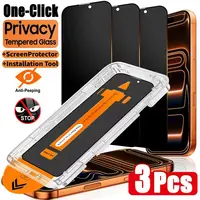

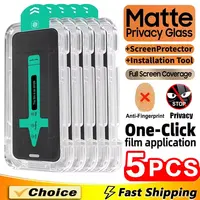
A privacy screen protector is one of the few phone accessories that does something you can see, and the thing it does is a trade. Twenty of them are on this page, nineteen with a privacy filter, and the titles are enthusiastic about pack sizes and generation lists and silent about the trade.
How a privacy filter works, and what it costs
Inside a privacy protector is a layer of microscopic louvres, like a very fine venetian blind stood on its edge. Look straight through and it is almost clear. Tilt past about thirty degrees and the louvres line up and the screen goes black. That is the whole feature, and it works: the person in the next seat sees nothing.
What no title here says is that you are looking through the same blind. Straight on, the louvres still take a slice off the brightness, and the screen looks a shade darker and cooler than it did. Most people turn the brightness up to compensate, and the battery pays for that all day. Tilt the phone to show someone a photo and they see the black screen you bought it for.
If you read on a train or type passwords in public, that is a trade worth making. If you mostly use the phone at home, a plain protector is the same glass without the tax.
One title says four-way, meaning the louvres run both ways and the screen blacks out from above and below as well as from the sides. On a phone held upright in a queue, above is where the eyes are.
Glass, ceramic or hydrogel
Sixteen titles say tempered glass. It is hard, it feels like the screen underneath, and when it takes a bad knock it cracks so the screen does not. That is what it is for.
Three say ceramic, and the word is doing some work. A ceramic protector is a flexible plastic film with a hard coating, sold on the fact that it will not shatter. It will not, and it scratches more easily than glass and feels slightly soft under a nail. It is the right choice for a phone that gets dropped a lot and the wrong one for a pocket with keys in it.
One is hydrogel, a soft TPU film that is cut to hug a curved edge and heals small scratches over a day or two. It is the quietest of the three to live with and the easiest to mark.
The words that mean nothing
9H is on one title. It is a pencil hardness: the hardest pencil that drags across the surface without scratching. Every tempered glass protector on sale passes it, and so does most ceramic film. It separates nothing.
9D, on another, is not a hardness. Sellers use 2.5D, 3D, 5D, 9D and 11D for the shape of the glass’s edge, and the number goes up because the last seller’s did. Read it as full cover with a curved edge, and check whether that suits your case.
8K, on one title, is a screen resolution and has no meaning on a sheet of glass.
Matte
Four titles say matte. A matte protector has a frosted surface that kills reflections and fingerprints and gives a finger a paper-like drag. It also softens text, a little, the way a frosted window does, and it is worth knowing that a matte privacy protector is two darkenings at once. Outdoors, in sun, it is the best of these. In bed, at night, it is the worst.
The fitting, which is where protectors fail
Five titles say dust free, easy install or come with an alignment frame. That is the part to care about. A protector goes on badly because of a hair, a speck, or a hand that puts it down two millimetres left, and a frame that sits over the phone and drops the glass in place removes all three. A protector without one is the same glass with a coin-flip fitting.
Two titles say oleophobic, one of them spelt wrong. That is the coating that makes a finger slide and a fingerprint wipe off, and it is on the factory screen you are covering. A protector without it feels sticky and smears. Only two of twenty mention it, and the rest may or may not have it.
The model list
Every iPhone title here is a list. One runs from the iPhone 6 to the 18 Pro Max. You choose the actual size from a menu at checkout, and a privacy glass cut for a 15 Pro is a millimetre wrong on a 16, which is enough to lift at the edge.
Find the model number in Settings, then choose. Do not choose by the year you bought it, and do not trust the photograph, which is of whichever phone the seller had.
Full cover, on three titles, means the glass goes to the edge. Some cases have a lip that catches a full-cover edge and lifts it within a week. The MagSafe case guide covers what to look for in the case; here, if you use a case with a lip, half cover is the safer choice and the titles will not tell you which they are.
What none of them says
Thickness. Not one title. Tempered glass protectors run from about 0.2 to 0.4 millimetres, and the thin ones fit under more cases and crack sooner.
Whether Face ID and the front camera are cut correctly. No title mentions the cut-out at all, on a product where the cut-out is the part that can go wrong.
How much light it blocks. None. The honest ones say around a quarter.
What I would actually do
For most people, the Joyroom. It is the one maker’s name on the page, and a name is a size chart and a customer service address.
For the fitting, the one that says oleophobic and comes with a frame. The coating is the difference between glass you notice and glass you do not, and the frame is the difference between one attempt and three.
For a commute, the four-way. It is the only title that blocks the direction a standing stranger looks from.
If you hate reflections, the matte one with the frame, bought knowing you have chosen two darkenings and the sun will thank you for both.
Whichever you choose, know your model number first, and expect to turn the brightness up.
Side by side
Prices in GBPUSDEUR. Each row carries the date its price was read.
| Product | Price | Why it is here | Where to buyLink |
|---|---|---|---|
| Best overall Joyroom 1/2Pcs Anti-spy Glass | £4.79$6.18€5.64checked 18 Oct 2026 | Joyroom, the only maker's name on the page, on a plain privacy glass for the current iPhones | Check opens in a new tab |
| For a clean fit Oleophobic Coating Dust Free Easy Installation | £3.73$4.80€4.38checked 18 Oct 2026 | The one title that says oleophobic, the coating that lets a finger slide and a fingerprint wipe, and it comes with a dust-free frame for the fitting | Check opens in a new tab |
| For a commute 1-2PCS Privacy Tempered Glass | £3.92$5.23€4.62checked 18 Oct 2026 | Four-way privacy, blocking the view from above as well as beside, which is where the person standing over a seated phone is looking from | Check opens in a new tab |
What a title here can settle
- Glass, ceramic or hydrogel. Sixteen titles say tempered glass, which is hard, shatters rather than scratches, and is what most people mean by a screen protector. Three say ceramic, which is a bendable plastic film that will not crack and scratches instead. One is hydrogel, a soft film that hugs a curved edge and shows every nail mark.
- Matte, on four titles, is the one word here that changes daily use. It kills reflections and fingerprints and it softens the text slightly, which on a privacy filter that has already darkened the screen is a trade to think about before you buy.
- A frame in the box, on five titles that say dust free or easy install, is worth more than any word about the glass. Most bubbles and crooked fits come from the hand, not the protector, and a frame takes the hand out of it.
- Four-way privacy, on one title, blocks the view from above and below as well as from the sides. On a phone held upright in a train that is the direction the person standing over you is looking from.
What to read twice
- A privacy filter is a dimmer that only lets you through. It is a layer of tiny louvres, and anyone more than about thirty degrees off centre sees a black screen. So do you, tilted. Straight on it takes a noticeable slice off the brightness, and you will turn the phone up to get it back, which the battery pays for. No title here says any of that.
- 9H means nothing. It is the hardest pencil that will not scratch the surface, and every tempered glass on sale passes it. One title says 9H and one says 9D, and 9D is not a hardness at all, it is a word for the shape of the edge.
- The model list is the trap. Titles here list up to twenty iPhones, and you pick the size at checkout, from a menu, in a language the seller wrote. Get it wrong and the glass is a millimetre out on every side. Know your model number before you open the listing.
- Full cover and a case do not always agree. Three titles say full cover, meaning the glass runs to the edge. A case with a lip can catch that edge and lift it, and the titles do not say which they are made to fit. Half cover is less pretty and stays down.