Tyre inflators, and why the PSI on the box is the wrong number
The short answer
Prices in GBPUSDEUReach row carries the day it was read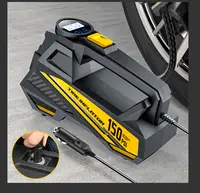

A tyre inflator is the boot item you forget about until the pressure warning comes on at a petrol station where the air machine wants a pound coin you do not have. Every one on this page will do the job. The question is which one is still working, and still charged, in two years.
The listings all shout the same number at you. It is the wrong one.
150 PSI is not what you think it is
A car tyre runs at somewhere between 30 and 40 PSI. A van, a little more. A bicycle road tyre, 80 to 100. The 150 PSI or 200 PSI in nine of the sixteen titles here is the maximum pressure the pump can push against, and every one of them clears a car tyre by a mile. The number tells you nothing about the pump you would actually notice.
What you notice is how long it takes. That is the flow rate, in litres per minute, and it is the number that separates a two-minute top-up from a ten-minute one. Not one title on this page states a flow rate. They give you a PSI figure and let you assume.
If a listing gives a flow rate, that is the pump paying attention to the right thing. If it gives only PSI, read the photographs for a litres-per-minute figure before believing the word “fast”.
Corded or cordless, which is the real decision
Corded pumps plug into the car’s 12V socket, the round one that used to be a cigarette lighter. They have no battery to go flat, they run as long as the engine is running, and they are usually lighter for the same power because the battery is the heaviest part of a cordless one. For a pump that lives in the boot of one car, corded is the honest answer.
Cordless pumps carry their own battery. That means they work on a bike, a pushchair, a football, and on a car parked so the socket is out of reach of the cable. It also means the pump can be flat on the day the tyre is. Two of the six cordless titles here say wired and wireless, meaning they also take a 12V lead, and that is the version to buy: cordless when it is charged, corded when it is not.
One title here is a jump starter with a compressor attached. That is a different product, bought for the jump start. Its pump will inflate a tyre, slowly, and it is not why you would buy it.
The feature worth paying for is the one that stops
Digital preset, pressure preset: two titles here use one of those phrases, and they mean the same thing. You dial in the pressure, press start, and the pump switches itself off at the number. Without it, you watch the gauge and stop by hand, which on a dark verge in the rain is how tyres get over-inflated.
It is not a luxury feature, and it is the first thing to look for after the power source.
Double cylinder, heavy duty, and the words that mean less
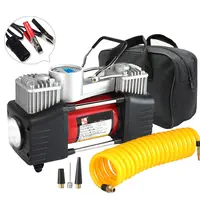
Double cylinder means two pistons instead of one. It is the plain mechanical reason a pump fills faster, and two titles here say it. On a large SUV tyre it is worth having.
Heavy duty appears in three titles and means nothing measurable. The number it stands in for is the duty cycle, how many minutes the pump can run before it must stop and cool, and no listing here gives one. Cheap pumps get hot. If yours is warm to the touch after one tyre, let it rest before the next.
Metal is worth noticing. A metal body sheds heat better than a plastic one, and three titles here make a point of it.
The socket’s fuse
A 12V socket has a fuse behind it, usually 10 or 15 amps. A pump that draws more than that blows the fuse, and then nothing in that socket works until the fuse is replaced. Bigger pumps draw more. No title here states its current draw, so if you have a large tyre and want the fast pump, look for one that clips to the battery terminals instead, or check your car’s fuse rating first.
What I would actually do
For a pump that lives in the boot, the corded one. It cannot be flat, it is light, and it does the job.
For a house with bikes, a pushchair and a car that parks nose-in, the cordless one with the digital display, and keep it on charge somewhere you will see it.
For a large tyre, or for anyone who would rather set a number and walk away, the double cylinder pump with the digital preset. It stops itself and it is quicker about getting there.
Whichever you choose, ignore the PSI, and look for litres per minute.
Side by side
Prices in GBPUSDEUR. Each row carries the date its price was read.
| Product | Price | Why it is here | Where to buyLink |
|---|---|---|---|
| Best for the boot Corded Car Air Pump Upgraded 12V 150PSI Electric | £22.14$29.52€26.06checked 18 Oct 2026 | Corded off the 12V socket, so it cannot be flat when the tyre is | Check opens in a new tab |
| If you want cordless 12V 150PSI Mini Tire Inflator Cordless Air | £23.31$31.09€27.43checked 18 Oct 2026 | Rechargeable with a digital display, for bikes and for cars where the socket is out of reach | Check opens in a new tab |
| If you want it to stop itself Digital Pressure Preset 12v Air Compressor Car Tyre | £22.01$28.37€25.90checked 18 Oct 2026 | Digital pressure preset, and double cylinder, which is the title's way of saying faster | Check opens in a new tab |
Read past the PSI
- Corded means it runs off the car's 12V socket. It never has a flat battery and it can run as long as the engine is on. It is the honest default for something that lives in the boot.
- Cordless means its own battery, so it works on a bike, a pushchair or a car parked nose-in with the socket out of reach. The trade is a battery that may be flat on the day you need it.
- Digital preset or auto-stop means you set the pressure and the pump switches off when it gets there. That is the feature that stops you over-inflating in the dark, and two titles here state it.
- Double cylinder in a title means two pistons, which is the plain way of saying faster. It is the one construction claim worth paying a little more for on a large tyre.
What 150 PSI does not mean
- 150 PSI is a ceiling, not a speed. A car tyre takes 30 to 40 PSI. Every pump here that states a figure clears that easily. How quickly it gets there is the flow rate in litres per minute, and not one title on this page states one.
- Heavy duty is a phrase. Three titles use it. None gives a duty cycle, the number of minutes the pump can run before it has to cool, and cheap pumps get hot fast.
- A jump starter with a compressor built in is a jump starter that also inflates, slowly. Buy it for the jump start and treat the pump as a bonus.
- The 12V socket has a fuse, usually 10 or 15 amps. A pump that draws more than that will blow it, and no pump here states its current draw.