USB-C charging cables, where nine claim more than 60W and one names the chip that allows it
The short answer
Prices in GBPUSDEUReach row carries the day it was read

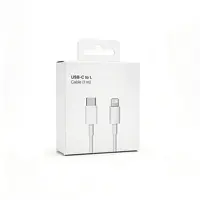
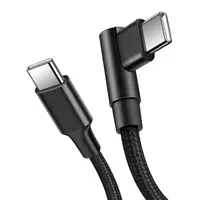


Twenty USB-C phone charging cables, and one number tells you most of what is wrong with the shelf. Nine of the twenty claim to carry more than 60W. One title in the whole twenty mentions the chip that a cable needs in order to do that, and it is on a cable that does not need it.
The general rule about watts and plugs is already written down on the cheap phone extras guide: a rating is a ceiling and not a speed, and Power Delivery is negotiated between two Type-C ends. This page is what happens when you count those things on twenty listings that people actually bought, and it turns up two things that page does not cover: the chip, and Apple’s socket change.
The E-marker, and the nine cables that need one
A USB-C cable is allowed to carry 3A on its own. To carry 5A it has to contain a small chip called an E-marker, which the charger reads before it decides how much to send. Without it, a charger that could deliver 100W will politely deliver 60W down a cable that never identified itself, which is the system working correctly.
So the wattage on a title splits cleanly:
| Claim | What it needs | Titles here |
|---|---|---|
| 20W, 35W, 45W, 60W | nothing special, 3A is enough | 7 |
| 65W, 66W, 100W, 120W | an E-marker, for 5A | 8 |
| 240W | an E-marker and the newer 48V standard | 1 |
Nine cables need a chip. One title mentions a chip. It is the 60W cable in the first row, where it is a courtesy rather than a requirement, and that is the cable this page recommends first, because a seller who names the part nobody asks about is telling you something about the rest of the listing.
This is not a claim that the other nine lack the chip. It is a claim that nothing in the title says they have it, on the one specification that decides whether their headline number can happen.
The end you cannot see in the photograph
Eleven of the twenty never say what plug is on the charger end.
That is the majority of the page, and it is the fact everything else depends on. Power Delivery only exists between two Type-C ends. Put the flat rectangular USB-A plug on the charger end and the highest number on the title becomes unreachable, because there is no PD conversation to have. The three listings here that say “USB to Type-C” are the honest ones, even though it reads like a smaller promise, and two of those three also claim 120W, which over USB-A can only be a proprietary scheme rather than PD.
Six say Type-C to Type-C. One says “USB A Type C to Type C” in a single line, which is both answers at once and means the listing has variants.
6A, 10A, and a connector that stops at 5A
Six titles state a current. One says 5A, which is the most a USB-C cable is ever allowed to carry. Four say 6A and one says 10A.
Those are real schemes rather than invented numbers: Huawei, Xiaomi and OPPO all push high current at low voltage down their own cables, which is how a phone takes 66W or 120W without the heat a high voltage would bring. The catch is that it only works when the charger, the cable and the phone all come from the same family. Plug a 10A cable into a normal charger and you have a normal cable, and the number on the sleeve has bought you nothing.
Which iPhone you have decides which cable this is
Apple changed the socket at the iPhone 15. The 15, 16 and 17 take USB-C. The 14 and everything before it takes Lightning.
That makes the model list on a title a specification rather than marketing. Two listings here name only pre-15 iPhones, so however often the words “USB-C” appear, the plug that goes into the phone is a Lightning plug and the 20W or 35W they state is the right number for those handsets. Seven name only USB-C iPhones. And one names the 11, 12, 13 and 14 alongside the 15, 16 and 17, which no single cable can be. That listing has variants, and the option list is where the real decision is.
What nobody says
Not one title states a data speed. At this end of the market, assume USB 2.0 inside, which is fine for charging and slow for pulling video off a phone. Not one states a conductor gauge, which is what actually decides how much a long cable droops under load. Not one mentions strain relief at the plug, which is where cables die.
Braiding appears on six, and it is worth having for the bag. It does nothing for the neck of the plug, which is the part that fails.
What I would buy
For almost anybody: the 60W Type-C to Type-C with the E-marker. 60W is more than any phone on this page can draw, both ends are stated, and it is the one listing whose claims do not need anything left out to be true.
If the phone is a Samsung from the S22 onwards, the 45W with 5A stated is built for exactly the case where a phone really does want more than 3A. If it is a OnePlus or an OPPO, buy the SuperVOOC cable and ignore the wattage race above it. If it is an iPhone 14 or earlier, buy the 20W and spend nothing more, because the phone will not take more.
And if a cable has ever broken on you where the plug meets the wire, buy the right-angle one.
I have not tested any of these. The titles are the whole of the evidence on this page, and every price in the table carries the date I read it.
Side by side
Prices in GBPUSDEUR. Each row carries the date its price was read.
| Product | Price | Why it is here | Where to buyLink |
|---|---|---|---|
| Best overall USB Type C to C PD 60W Fast Charging Cable | £2.69$3.58€3.17checked 18 Oct 2026 | The only title on the page that mentions an E-marker, and the only one whose numbers all agree with each other: Type-C to Type-C stated on both ends, 60W, and a chip it does not strictly need at that wattage. 60W is far more than any phone here can draw, so the headroom is spent on the cable running cool rather than on a claim | Check opens in a new tab |
| For a Samsung 5A PD 45W Dual USB C Super Fast Charge Cable | £2.67$3.57€3.15checked 18 Oct 2026 | Dual USB-C, 45W and 5A, and those three facts are consistent: 45W is the figure Samsung's own fast charging uses on the S22 onwards, and it is the one case where a phone genuinely asks for more than 3A, which is why the 5A is there. The listing names the handsets it is for and they are the handsets that can use it | Check opens in a new tab |
| For an iPhone 14 or earlier PD 20W Fast Charging USB C Cable | £3.09$4.12€3.63checked 18 Oct 2026 | The model list is the specification here. It names the iPhone 11 through 14 and the XS, every one of which has a Lightning socket, so this is a USB-C to Lightning cable and the 20W is exactly what those phones accept. Buying a 100W cable for one of them changes nothing at all | Check opens in a new tab |
What a title here can settle
- What is on the charger end, on nine of the twenty. Six say Type-C to Type-C and three say USB to Type-C. This is the first thing to look for and it is not a detail: USB Power Delivery is negotiated between two Type-C ends, so a cable with the flat rectangular plug on the charger end cannot do PD at all, whatever number is printed beside it. The three that say USB to Type-C are being honest about a real limit.
- A wattage, on sixteen. Seven claim 60W or less, which is the range an ordinary USB-C cable carries on its own, and 60W is already more than any phone here can take. Where a title says 20W, 35W, 45W or 60W, that figure is at least physically ordinary.
- Which phone the seller has in mind, on all twenty. Every title names handsets. That matters more on this shelf than on most, because Apple changed the socket: an iPhone 15 or later takes USB-C, and an iPhone 14 or earlier takes Lightning, so the model list tells you which cable is actually in the packet even when the words do not.
- A length, on seven, and a sleeve on six. Four offer a choice of lengths in the one listing. Braided, nylon or weaving appears on six, and a braided sleeve does survive a bag better than a smooth jacket. Three are right-angle plugs, which is the shape for holding a phone sideways while it charges.
What to read twice
- Nine titles claim more than 60W and one title in the whole twenty mentions an E-marker. A USB-C cable carries 3A unless it contains a small chip, the E-marker, that tells the charger it is safe to send 5A. 60W is 20V at 3A, so a 60W cable needs no chip. 100W, 120W and 240W all need one. The single title that says E-marker is a 60W cable, which is the one wattage on this page that does not require it, and not one of the nine that do says anything about what is inside.
- Five titles state a current the connector has no room for. The USB-C standard tops out at 5A. One cable here says 5A. Four say 6A and one says 10A. Those numbers are not nonsense, they are proprietary schemes, Huawei SuperCharge and the Xiaomi and OPPO equivalents, and they work only when the charger, the cable and the phone are all from that one family. Bought for any other phone, a 10A cable is an ordinary cable.
- One listing names iPhones from both sides of the socket change, and one is not a cable. A title offering to fit the iPhone 11, 12, 13 and 14 as well as the 15, 16 and 17 is describing two different cables, so it has variants and the choice is yours to make in the option list rather than the seller's. Another result here is a 65W wall charger that happens to include a cable, which is a good reminder that a search result is not a shortlist.
- Eleven never say what plug is on the charger end at all. That is the majority of the page, and it is the one fact that decides whether a 100W claim can happen or is decoration. Nothing here states a data speed either, so assume USB 2.0 inside: fine for power, slow if you ever move video off the phone with it.