Cheap garden lights, and the three things that decide whether they survive a winter
The short answer
Prices in GBPUSDEUReach row carries the day it was read

Outdoor lights are the easiest thing on AliExpress to buy badly. They cost four to eight pounds, they photograph beautifully, and a large share of them stop working somewhere between the first heavy rain and the first frost.
The good ones are not more expensive. They are just different in three specific ways, and the listings mention all three if you know where to look.
The IP rating is the whole product
Every outdoor light should state one, and it looks like IP44, IP65 or IP67. The second digit is the water one and it is the only digit that matters here.
- IP44 means splashes. That is a sheltered porch, not a garden. British rain does not fall politely from above.
- IP65 means jets of water from any direction. This is the minimum for anything that lives outside all year.
- IP67 means it survives being submerged briefly. Worth it for anything at ground level, because that is where puddles form.
If a listing does not state an IP rating at all, assume IP44. A seller with IP65 hardware says so, because it is the thing that justifies charging more.
Where the water actually gets in
Not through the bulb. Through the joins.
The three failure points, in the order they go:
- The battery compartment on a solar unit. It is a screwed plastic lid with a rubber gasket, and the gasket is where the cost is cut. Buyer photos showing a green crust inside the compartment are showing you exactly this.
- The join between the cable and the first bulb. On string lights this is moulded on good sets and glued on cheap ones.
- The solar panel seal. Water gets under the panel, fogs it from the inside, and the light gets dimmer every week without ever fully dying.
There is one thing you can do about all three, and it costs nothing: put a bead of clear silicone sealant round the battery lid and the cable joins before you put them out. Ten minutes, and it is the difference between one season and four.
Solar lights and the battery nobody mentions
The panel is not the part that fails. The battery is.
Cheap solar lights use a single NiMH AA or a small lithium cell, and after a winter of charging in weak British daylight and discharging every night, it holds a fraction of what it did. This is normal, not a fault, and it is why a solar light that was brilliant in July is feeble by February.
Two things follow from that:
Buy one with a replaceable battery. If the compartment takes a standard AA or 18650, you can spend two pounds in year two instead of buying the light again. If the cell is soldered in, the light is disposable and priced as though it is not.
Ignore the stated hours. “Up to 12 hours” is measured on a fresh battery after a full day of direct sun, at the dimmest setting. In a UK winter, on the brightest setting, expect two to three.
Mains versus solar versus USB
The choice most people get wrong.
Solar suits anywhere you cannot run a cable and do not mind it being dim in winter. Path markers, fence lights, anything decorative.
Mains, through a plug and a transformer, is the only option if you want reliable brightness in December. It also means an outdoor socket or a cable through a window, which is the reason most people end up with solar.
USB powered is the quiet third option and it is the right one more often than people expect. A power bank runs a set of string lights for a whole evening and you bring it indoors afterwards, which removes the weather problem entirely. For a table, a party, or a balcony, this beats both.
Warm white, cold white, and why your photos look wrong
Colour temperature is stated in kelvin and it changes the whole feel of a garden.
- 2700K to 3000K, warm white. Looks like candlelight and incandescent bulbs. This is what the listing photos are showing you.
- 4000K, neutral. Fine for a work area, cold for a patio.
- 6000K and up, cool white. Looks like a car park. Cheap LEDs default here because cool white diodes are cheaper and read as brighter.
If the listing does not say, it is cool white. The photograph will have been taken with a warm one, or colour graded. This is the single most common disappointment in this category and the easiest to avoid.
Colour changing sets are a separate thing and are usually genuinely fun, but the white on an RGB set is made by mixing and it is never as pleasant as a dedicated warm white.
Delivery, and the timing that matters
Three to four weeks to the UK is normal.
The practical consequence: order summer lighting in April, not June, and Christmas lighting in September. This category sells out and slows down exactly when everybody wants it, and a set that arrives in the second week of July has lost you half the season.
What I would actually do
- Table or dining area: USB powered string lights and a power bank. Bring them in. They will last years.
- Anything permanent outdoors: IP65 minimum, replaceable battery, warm white, and silicone the joins before it goes up.
- Path or fence markers: solar is fine, buy more than you need, and accept that a couple will fail. At five pounds a set that is still the cheapest way to light a path.
- Indoors: none of the above matters. Buy the one you like the look of.
This is a buying guide built from what the listings publish and from prices I read and date myself. I have not installed any of the lights listed. When I buy and use one through a winter, this page becomes a hands-on review with my own photographs and it will say so at the top.
Side by side
Prices in GBPUSDEUR. Each row carries the date its price was read.
| Product | Price | Why it is here | Where to buyLink |
|---|---|---|---|
| Best for a table LED String Lights Patio Umbrella 8 Lighting Mode | £8.96$11.96€10.55checked 18 Oct 2026 | Umbrella lights with a remote, so no crawling under the table | Check opens in a new tab |
| Best solar 138/468/238 LED Solar Light Outdoor waterproof | £6.16$8.24€7.25checked 18 Oct 2026 | Solar panel and light in one unit, nothing to wire | Check opens in a new tab |
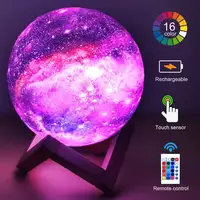
| Best indoors ZK20 3D Printing Moon Lamp Galaxy Light Kids Night | £6.35$8.46€7.47checked 18 Oct 2026 | USB moon lamp, no weather to survive at all | Check opens in a new tab |
The good ones cost the same
- The lights that last are not the more expensive ones: they differ in three ways the listings show, if you know where to look.
- For a table or dining area I would buy USB string lights and a power bank: bring them in, and they last years.
- Ten minutes with clear silicone round the battery lid and the cable joins is the difference between one season and four.
- For anything permanent outdoors the spec is short: IP65 minimum, a replaceable battery, warm white.
What the listing leaves out is what fails
- The first part to go is the solar battery lid gasket, and buyer photos of green crust inside the compartment show exactly that.
- A solar light that is brilliant in July is feeble by February, and a fading cell is normal here, not a fault.
- If a listing does not state a colour temperature it is cool white, whatever the warm photograph shows: the most common disappointment here.
- Delivery runs three to four weeks, so a set ordered in June lands in July with half the season already lost.